
Oakland Criminal History Checks
Begin an Oakland criminal record search by naming the exact event and the record needed. The city route is best for an Oakland incident or arrest report. The Coles County Sheriff route answers whether a person entered county custody. Judici and the Circuit Clerk show whether prosecutors filed a case and how the court handled it. Illinois State Police records are a separate state layer.
Oakland has no verified online arrest log, police app, or municipal criminal case portal. That makes a clear sequence more useful than trying a string of broad name searches.
- Ask Oakland City Hall which city office holds the incident or arrest report and use the City Clerk's FOIA route.
- Describe the event with the date, time, location, report number, and officer or agency when known.
- Check the Coles County Sheriff's current and recent confinement views if the event may have led to a county booking.
- Search Coles County cases through Judici, then ask the Circuit Clerk for a certified copy or an older file.
- Use Illinois State Police CHIRP for a statewide conviction inquiry, or Access and Review to inspect and challenge your own Illinois history.
Oakland Records Without a Portal
Oakland's scale changes the search method. A missing city portal does not mean that no record exists. It means the request starts with a custodian rather than a search form. The official Oakland city page is the sound entry point for current municipal information.
The official page is shown below because it confirms the city channel instead of sending a reader to an unofficial directory.
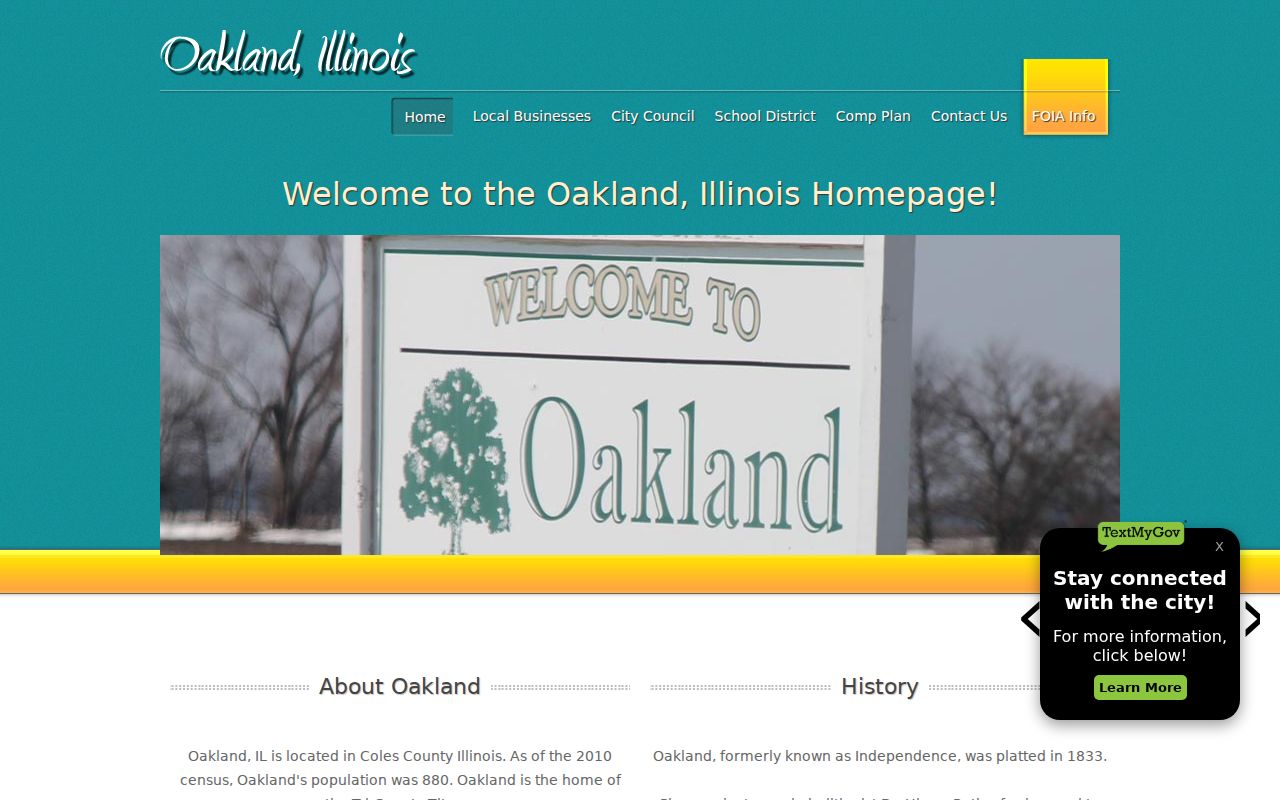
Use that city source to confirm the current contact before submitting a request. A precise note is more useful than asking for every record tied to a name, especially when the city has no verified public query that exposes its internal report fields.
Records at Oakland Police
Oakland police records remain city records when Oakland made the report. An initial narrative, a supplemental report, dispatch material, or evidence may have different review rules. The research did not verify a separate police records-unit phone, set counter hours, or a fully inventoried city PDF form. City Hall is therefore the confirmed starting point, not a guessed police contact.
Send the City Clerk enough detail to identify the record. Include requester contact information, the event date and place, the report number if known, the officer or agency, and whether electronic copies, paper copies, or inspection will work. A fee ceiling can prevent an unexpected charge. Illinois FOIA does not let a public body require its preferred form as the only valid way to ask, though following Oakland's posted route can make handling easier.
The official Oakland FOIA instructions show the verified City Clerk route.
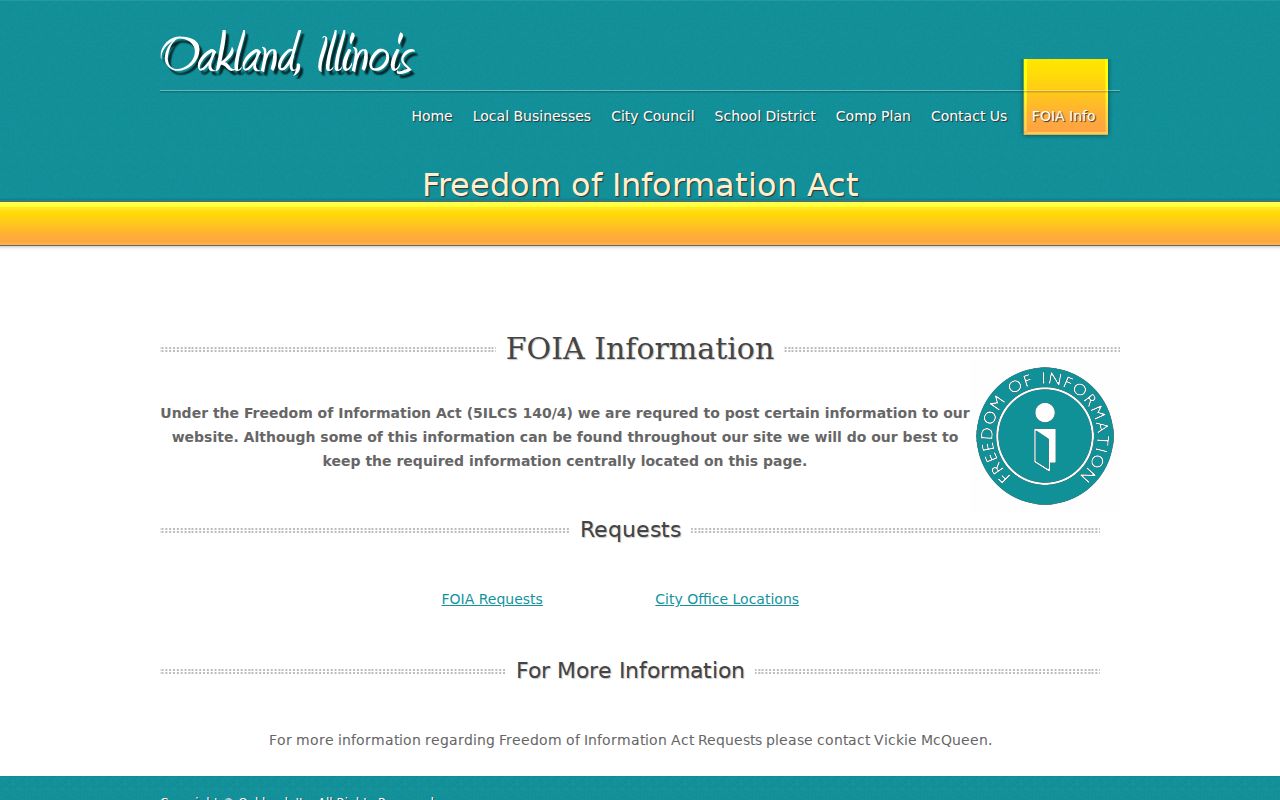
This source helps a requester avoid relying on an unverified police form or an unofficial contact directory.
Oakland City Hall Requests
The Oakland FOIA page directs public-record inquiries to the City Clerk. City Hall is at 301 East State Highway 133, Oakland, IL 61943, and the published email is oaklandch@consolidated.net. No city report base fee was verified, so a requester should ask for an estimate rather than assume a price.
The official location view below confirms the municipal destination for an in-person Oakland request.
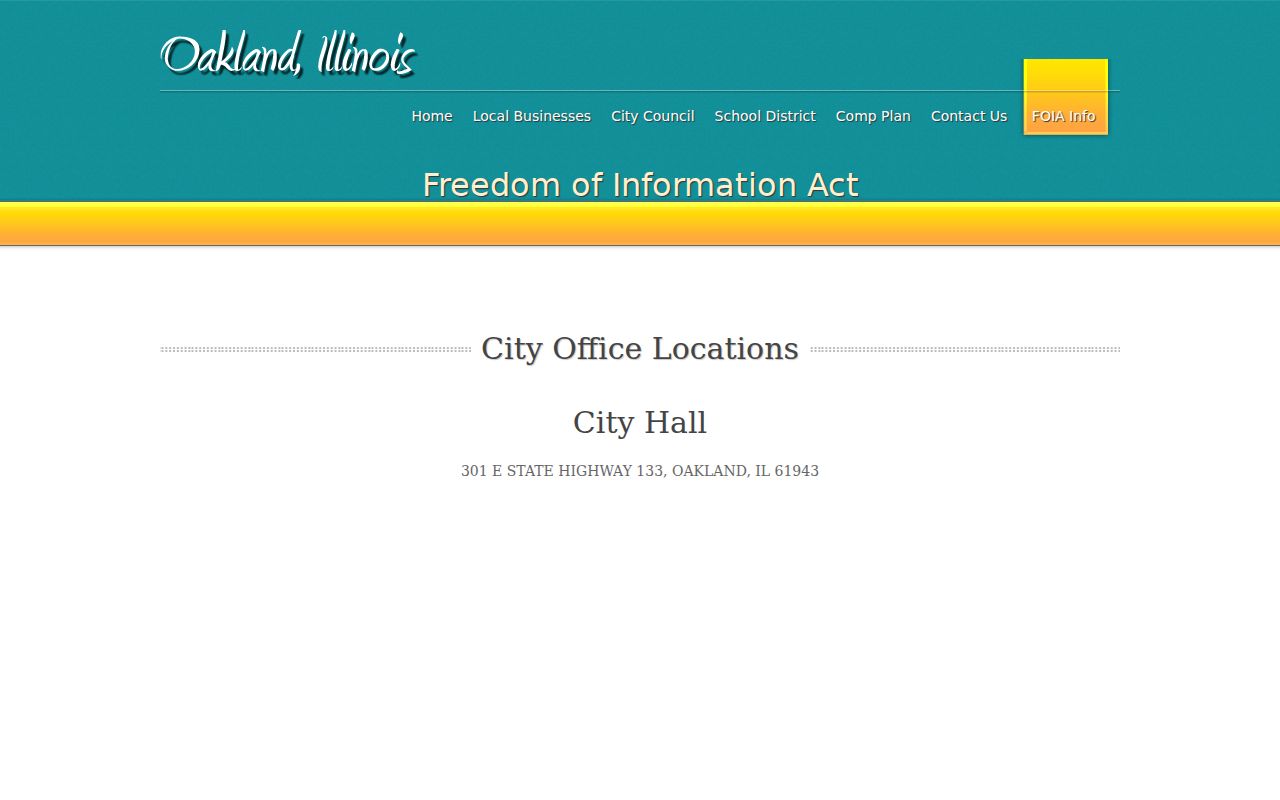
Before traveling, confirm current access and office hours by email. That is especially important because the research did not establish fixed records-counter hours or a direct police records line.
Oakland City Hall
301 East State Highway 133
Oakland, IL 61943
oaklandch@consolidated.net
City Clerk route for Oakland public-record inquiries.
Booking and Arrest Records in Oakland
Oakland does not have a separately verified jail or city booking page. When county custody accepts a person arrested in Oakland, the Coles County Jail creates the booking record. That county entry is distinct from the Oakland arrest report. A citation or encounter may not lead to jail admission, so no jail-list match should not be treated as proof that an event did not occur.
The Sheriff provides current and recently confined views from its official site. If a fresh Oakland event is missing, ask whether the person was released before the list refreshed, was cited without booking, or was taken by another agency. For a full county-level explanation, the Coles County arrest search separates police reports from booking and court records.
When Oakland Was Not the Agency
Location alone does not decide who holds a report. Illinois State Police or the Coles County Sheriff may make an arrest in or near Oakland. In that event, Oakland City Hall cannot supply another agency's report. Identify the name on paperwork, the squad marking, the report number prefix, or the booking agency before filing.
This is a common small-city trap. A request sent to the wrong office may yield a lawful no-record response even when a report exists elsewhere. Ask Oakland to confirm whether it participated, then direct the request to the agency that created the narrative. The county jail may still hold the booking entry, regardless of which agency made the arrest.
The Oakland Municipal Court File
No separate Oakland criminal court database was verified. Public criminal, traffic, and ordinance matters filed in Coles County move through the Circuit Court in Charleston. Judici offers the online name and case search. The Circuit Clerk holds the official docket, copies, certifications, and material outside the portal's coverage.
| Court Name | Coles County Circuit Court, Fifth Judicial Circuit |
|---|---|
| Case Types Heard | Filed felony, misdemeanor, traffic, ordinance, juvenile, and other trial matters; restricted files are not public |
| Case Lookup Channel | Coles County Judici for free basic public access; Circuit Clerk for the official file |
| What the Docket Shows | Case number, filed charges, events, appearances, disposition, and sentence when publicly available |
| Copies & Fees | Request copies or certification from the Circuit Clerk and confirm the current charge before ordering |
Judici states that Coles County coverage begins in 1989. Older, sealed, juvenile, impounded, or otherwise restricted material requires a clerk inquiry and may not be available to the public.
Oakland Names in Coles Judici
An Oakland name search in Judici answers a court question, not a police-report question. Search by full name and narrow the result with a birth year or case type when the interface permits. Compare the case number, charge, filing date, and disposition before treating a match as the right person.
When a booking has no case result yet, the State's Attorney may still be reviewing the event, the clerk may not have posted it, or no charge may be filed. Contact the Circuit Clerk at 217-348-0516 for an official status check. The clerk's counter is at 651 Jackson Avenue, Charleston, IL 61920, with published public hours of 8:30 a.m. to 4:30 p.m.
How Oakland Records Reach the County
An Oakland incident begins with the agency report. If county custody accepts the person, jail staff create a booking file and submit fingerprints tied to that arrest cycle. Prosecutors decide whether to file charges. The Circuit Clerk then creates the court case, and a qualifying final disposition is reported to Illinois State Police.
Record flow: Oakland police record › Coles County jail and Circuit Court › Illinois State Police Bureau of Identification
Each stop answers a different question. The city report describes the event. The jail view shows custody, not guilt. The court file shows filed charges and outcomes. CHIRP provides Illinois conviction information and is not a complete police narrative or full rap sheet.
Oakland Report, Booking, and Case
Three records can stem from one Oakland event, yet none replaces the others. Compare them by source and purpose before drawing a conclusion.
| Record | Primary custodian | Best use |
|---|---|---|
| Incident or arrest report | Oakland or the agency that made the report | Event narrative, involved officers, and local report details |
| Booking or confinement entry | Coles County Sheriff | Admission, custody status, listed charges, and bond details |
| Circuit case file | Coles County Circuit Clerk | Filed counts, hearings, disposition, and sentence |
A person can have one of these records without all three. A report may close without charges, a citation may skip jail, and a court count may differ from the offense named at arrest.
Reading Oakland Crime Records Carefully
Oakland's small population makes one-year rates unstable. A small change in the number of reported incidents can create a large percentage swing. Use Oakland's own agency entry in the FBI Crime Data Explorer or Illinois Crime in Illinois material, name the year, and check whether all months were reported.
The Census source supports the scale behind that caution. Oakland's official 2020 count was 739, while no comparable 2025 QuickFacts estimate was published for the city. Do not place that 2020 count beside later estimates for Charleston or Mattoon as if all three values share one date.
The official decennial Census data page explains the source used for Oakland's ranking.
Citywide counts describe reports to an agency. They do not predict any person's conduct or settle whether a specific Oakland record belongs to the right individual.
Oakland Records and Local History
Oakland's official history says the community was first called Independence and was platted in 1833. It also highlights abolitionist physician Dr. Hiram Rutherford, who arrived in 1840, and the 1847 Matson freedom suit. Abraham Lincoln represented the claimant who lost that case. Rutherford-linked historic places remain part of the city's identity.
That past is useful for understanding Oakland's civic setting, but it does not imply that modern online systems contain every old file. Historical research may require archives, court indexes, or local repositories rather than current criminal record portals. Keep genealogy and present-day identity checks separate, since shared family names in a small community raise the risk of a false match.
Oakland Record Access Rules
Oakland records are subject to Illinois access rules, but public access is not the same as unlimited release. A city may review police material for active-investigation, privacy, juvenile, victim, security, and other lawful restrictions. Court remote access also excludes sealed, impounded, juvenile, and other protected content. Ask for a written explanation if material is withheld or redacted.
Key Statutes:
Illinois Freedom of Information Act, 5 ILCS 140 sets the request and exemption rules for Oakland public records.
Uniform Conviction Information Act, 20 ILCS 2635 governs public Illinois conviction information and CHIRP inquiries.
Criminal Identification Act, 20 ILCS 2630 governs state criminal-history records and includes Illinois expungement and sealing law.
For self-review, Illinois State Police Access and Review is the better route than assuming a public name result is complete. It permits a person to inspect and challenge their own Illinois criminal history, while the local report and Circuit Clerk file remain the sources for Oakland-specific detail.